

Wall Paint Colour
Wood Furniture
The Best Wall Paint Colours to Complement Wood Furniture and Floors
There is a certain comfort that only wood can bring into a home. The grain tells a story. The texture feels familiar under your fingertips. A wooden dining table, an old cabinet, or even polished flooring carries warmth that no other material quite matches. It reminds us of homes that felt grounded, lived in, and welcoming from the moment you stepped inside.
Wood already has character. The right wall colour simply allows it to shine.
At Asian Paints, we often say that choosing paint for a space with wooden furniture is less about matching and more about creating harmony. When colour and wood work together, the room feels balanced, layered, and deeply inviting.
IN THIS ARTICLE
1. Why Choosing the Right Paint Matters Around Wood
2. Start by Understanding the Undertone of Your Wood
3. Use Contrast to Let Wood Become the Hero
4. Low Contrast Creates Calm, Layered Interiors
5. Complementary Colours Bring Out the Natural Beauty of Wood
6. Wall Colour Ideas That Work Beautifully with Wood
Why Choosing the Right Paint Matters Around Wood
Wood has natural undertones that influence how a room feels. Some woods lean golden and warm. Others appear smoky, cool, or neutral. When wall colours respond to those undertones thoughtfully, the space feels cohesive rather than accidental.
A well-chosen palette highlights the grain, enhances texture, and makes furniture look intentional instead of simply placed.
Start by Understanding the Undertone of Your Wood
Before picking paint, observe your wood closely in natural light. Does it feel honey-toned, reddish, greyish, or pale and sandy?
Matching the temperature of your wall colour with the undertone of the wood creates a sense of flow. A cool-toned wood pairs beautifully with soft greys or muted blues for an airy atmosphere. Warm woods respond well to creams, earthy neutrals, or subtle greens that enhance their richness.
This simple step prevents the space from feeling visually disconnected.

Use Contrast to Let Wood Become the Hero
Contrast allows wooden details to stand out with confidence. When walls differ from the tone of the furniture, the eye naturally notices the craftsmanship and texture of the wood.
Dark walnut furniture against soft off-white walls feels elegant and defined. Pale oak against deeper painted walls feels contemporary and grounded. The contrast adds dimension without overwhelming the room.
Balance is key. Let the wood remain the focal point while the paint supports it quietly.

Low Contrast Creates Calm, Layered Interiors
Sometimes subtlety makes the strongest statement. Choosing wall colours with similar depth to the wood produces a rich, cocooned environment.
Deep rosewood paired with earthy greens or warm clay tones creates a refined atmosphere that feels collected over time.
Instead of a sharp contrast, this approach builds visual layers that feel restful and cohesive.
It works beautifully in living rooms, studies, or bedrooms where comfort leads the design.

Complementary Colours Bring Out the Natural Beauty of Wood
Complementary shades sit opposite each other on the colour wheel and help balance the warmth or coolness of wood tones.
For example, warm wooden finishes feel more vibrant when paired with cooler wall colours that provide gentle contrast. Cooler woods gain warmth and depth when surrounded by earthy neutrals.
This relationship enhances the natural variation in wood grain and prevents the space from feeling flat.
Wall Colour Ideas That Work Beautifully with Wood

Soft Whites for a Timeless Pairing
White remains one of the most versatile companions to wood. It reflects light, keeps the room open, and allows wooden furniture and flooring to take centre stage.
Choose warmer whites or creamy shades to avoid a stark look, especially with golden or reddish woods. These tones create a welcoming environment that feels relaxed yet refined.

Green Tones with Pine or Honey Coloured Wood
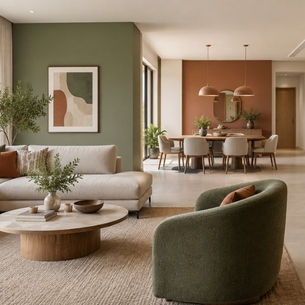
Green feels naturally connected to wood because both echo the outdoors. From sage to olive, green walls enhance honey-toned pine and create a calming, nature-inspired setting.
This pairing works especially well in spaces where you want to bring a sense of quiet and renewal.

Beige and Taupe for Homes with Mixed Wood Finishes
Many homes feature furniture collected over time, often in different wood shades. Neutral wall colours like beige, taupe, or sand unify these variations and create a cohesive backdrop.
These tones soften contrasts and allow each piece to belong without competing.

Cream Walls with Warm Wood for Soft Elegance
Cream adds warmth while still keeping the room bright. When paired with teak, sheesham, or other warm woods, it produces a soothing colour combination that feels spacious yet cosy.
This palette suits living rooms and bedrooms where comfort is the priority.

Warm Greys with Weathered or Light Wood
Grey introduces a modern sensibility while allowing rustic or pale wood to retain its charm. Warmer greys feel inviting and relaxed. Cooler greys create a sleeker, contemporary mood.
This combination bridges traditional textures and modern design beautifully.
How to Balance Walls and Wooden Furniture
A helpful principle is visual proportion. Let either the wall colour or the wood dominate while the other supports it. Dark furniture against lighter walls enhances openness. Light wood against deeper walls creates intimacy.
Observe your room at different times of the day. Natural light changes how both paint and wood appear, so sampling colours on the wall helps ensure harmony.
Let Wood and Colour Tell the Story Together
Wood brings authenticity into a home. The right paint colour does not overshadow it. It frames it, enhances it, and allows its character to be appreciated every day.
When thoughtfully paired, wall colour and wood create spaces that feel warm in winter, bright in summer, and welcoming all year round. The result is a home that feels grounded, balanced, and enduring rather than driven by passing trends.
LIKE THIS ARTICLE
Give us a thumbs up!
TEXTURE FINISH
Royale Play special effects for the interior


Call us for Painting Services
 1800-209-5678
Are you looking for home interiors?
Get tailored made designs from our interior design services by asian paints.
Are you looking for home interiors?
Get tailored made designs from our interior design services by asian paints.
Fill the form below to book an appointment with an in house interior designer.